



The Alignment Advantage: What a decade of culture research and transformation advisory work tells us
.jpg)
Culture doesn't stand still. Neither does the case for taking it seriously.
Since 2016, we've run four rounds of research under one banner: Cracking the Culture Code. We started in partnership with Bournemouth University and later expanded into our own ongoing programme, covering more than 6,000 organisations across 27 sectors. The question has always been the same;
what actually separates high-performing organisations from the rest?
In that time the answer has sharpened. Some of the findings remain steadfast as foundations. Some of it has moved as the context has changed.
The model, in plain terms
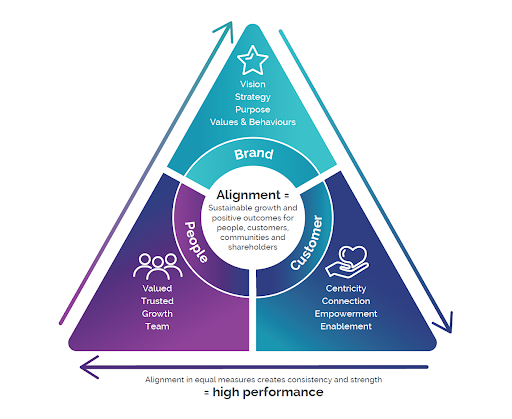
If you're new to our research, here's the shorthand. We measure culture across three dimensions correlated with performance, sentiment, and outcome data.
- Brand: vision, purpose, strategy, values and behaviours
- Customer: how centred the organisation is on the people who buy/ benefit from it
- People: how valued, trusted, and engaged the workforce feels
High-performing organisations aren't necessarily brilliant at one of these. They're consistently strong across all three.
That single finding — alignment, not excellence in isolation — is the spine of everything we've published since 2017.
And here's how we know it's working: we measure performance itself as sentiment, across three dimensions in our research.
- Confidence: belief in future success and in financial performance
- Commitment: to staying with the organisation, and to its products and services
- Advocacy: employees recommending the organisation, and their sense of whether customers would recommend it too
Brand, Customer, and People are what we measure to explain performance. Confidence, Commitment, and Advocacy (as very strong predictors of actual performance) are the measures we use to assess performance in our research. With our clients, we take the next step and link alignment to actual business performance and outcomes.
What's stayed constant
Alignment still wins. Our 2023 study (1,656 participants, 27 sectors) found a 182% difference in how evenly matched Brand, Customer, and People scores were, between high and low performers. Low performers differ significantly between their best and worst attribute; high performers don't (dragonfish, Cracking the Culture Code 4.0, 2023). That's the same story our 2017 study told with a different data set: culture isn't one lever, it's how tightly the levers move together.
Managers still carry more weight than most leadership teams admit. In 2018, we found the weakest links to vision, purpose and values all ran through the line manager, not the C-suite (dragonfish, Cracking the Culture Code 2.0, 2018). That specific question set hasn't been re-run since, however our work with organisations continues to demonstrate the importance of managers in driving high performance cultures.
What's changed
Customer has overtaken People as the strongest of the three dimensions — even among low performers. In 2017, People was the foundation. By 2023, Customer had taken its place (dragonfish, Cracking the Culture Code 4.0, 2023). Read that as two decades of CX (customer experience) investment finally showing up in the data, not as People becoming less important. It's still there — just relatively behind.
The definition of culture has widened. The 2017 survey was built from employee engagement staples plus brand and customer questions. The 2023 refresh added ethics, psychological safety, belonging, wellbeing, EDI and ESG — a genuine reflection of what "culture" now means, not just a longer questionnaire.
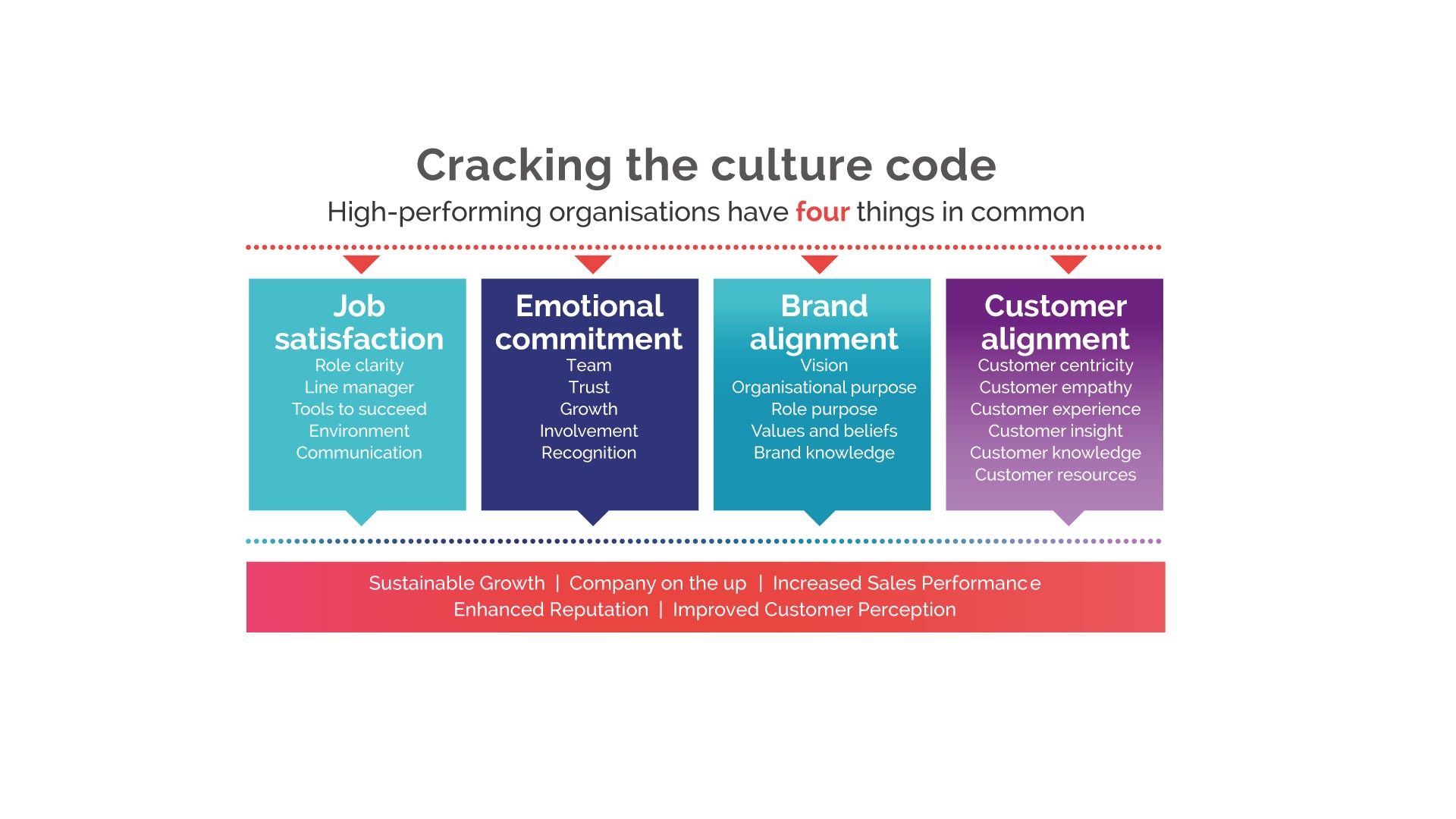
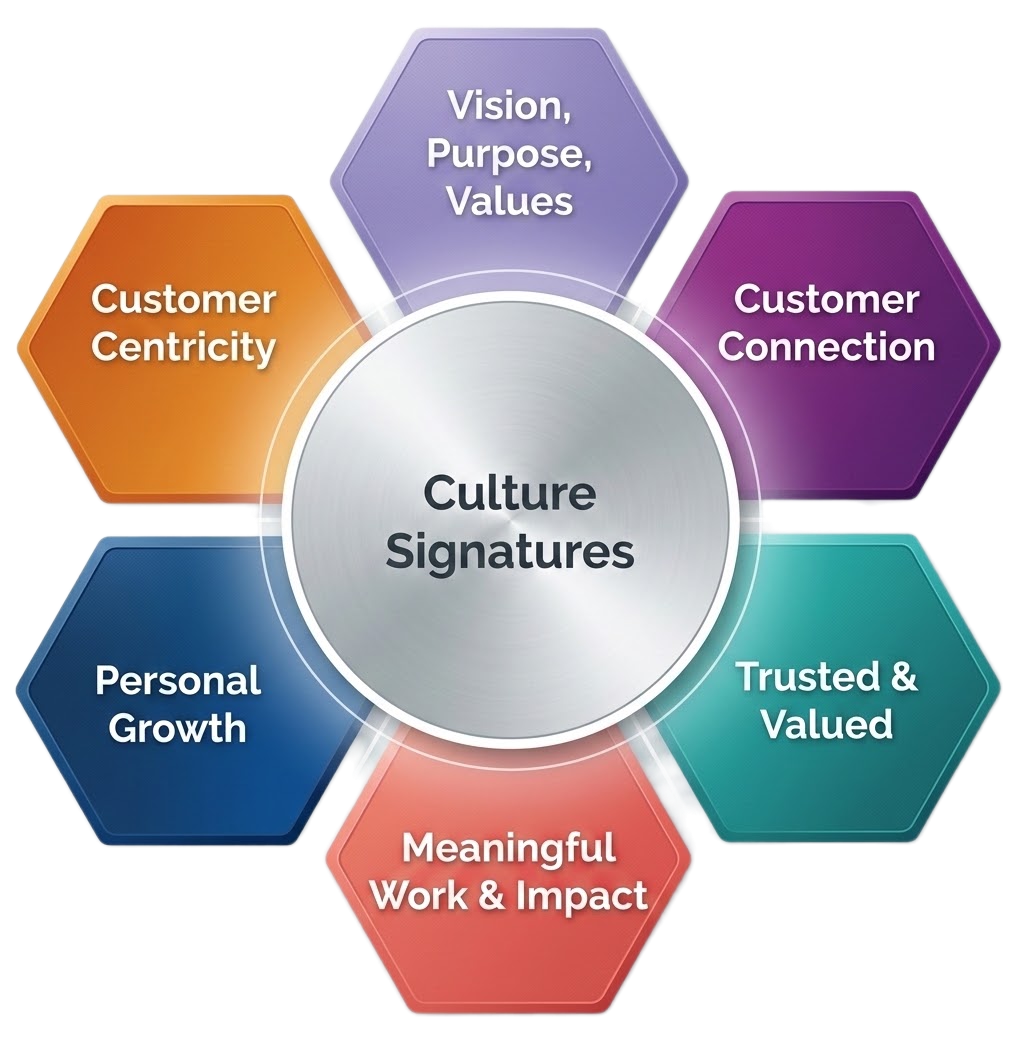
And where 2017 gave us four factors (job satisfaction, emotional commitment, brand alignment, customer alignment), 2023 gives us six "culture signatures": Vision, Purpose & Values; Customer Centricity; Customer Connection; Meaningful Work & Impact; Personal Growth; and Trusted & Valued. A more granular map of the same territory.
Introducing the Alignment Advantage
Everything above points to the same conclusion, so let's name it properly.
Organisational alignment sets the playing field — strategy, goals, systems and processes, all pulling in the same direction. Most leadership teams understand this one. They work on it. They measure it.
Cultural alignment is different. It's the harmony between your people, your brand, and your customers, and it's what creates the conditions for people to play their best game, every time. This is where the real performance gap lives. And it's the one most often left to chance.
Put the two together and you get what we call the Alignment Advantage: what happens when everything is working in sync.
- Aligned agendas, not competing ones
- Decisions made quickly, because the reference points are clear
- Teams that harness tension rather than being paralysed by it
- Creativity that's channelled rather than wasted
- Organisations that don't just perform, but adapt, grow and stay resilient when the world shifts around them
"High performers don't have the highest individual scores. They have the most consistent ones. That consistency is what we call the Alignment Advantage." — dragonfish
So, is your culture built for this?
You now know the model. Alignment beats individual excellence. Consistency beats intensity in any one area. And the way your people, brand, and customers connect is measurable, not mysterious.
If you're not sure where your organisation stands, that's exactly what our research-based culture diagnostic Lumin is built to answer. Get in touch and we'll walk you through it and show you how it could help you.
- Please ask us about running a complimentary 90-minute facilitated ‘discovery and health check’ session with you and some key stakeholders
- Leadership meeting - ask us to drop in to one of your exec and SLT team meets to run a quick 20-min thought leadership overview and quick exercise for you to discuss afterwards
More from our journal